Image - 2026-11-27 12:59
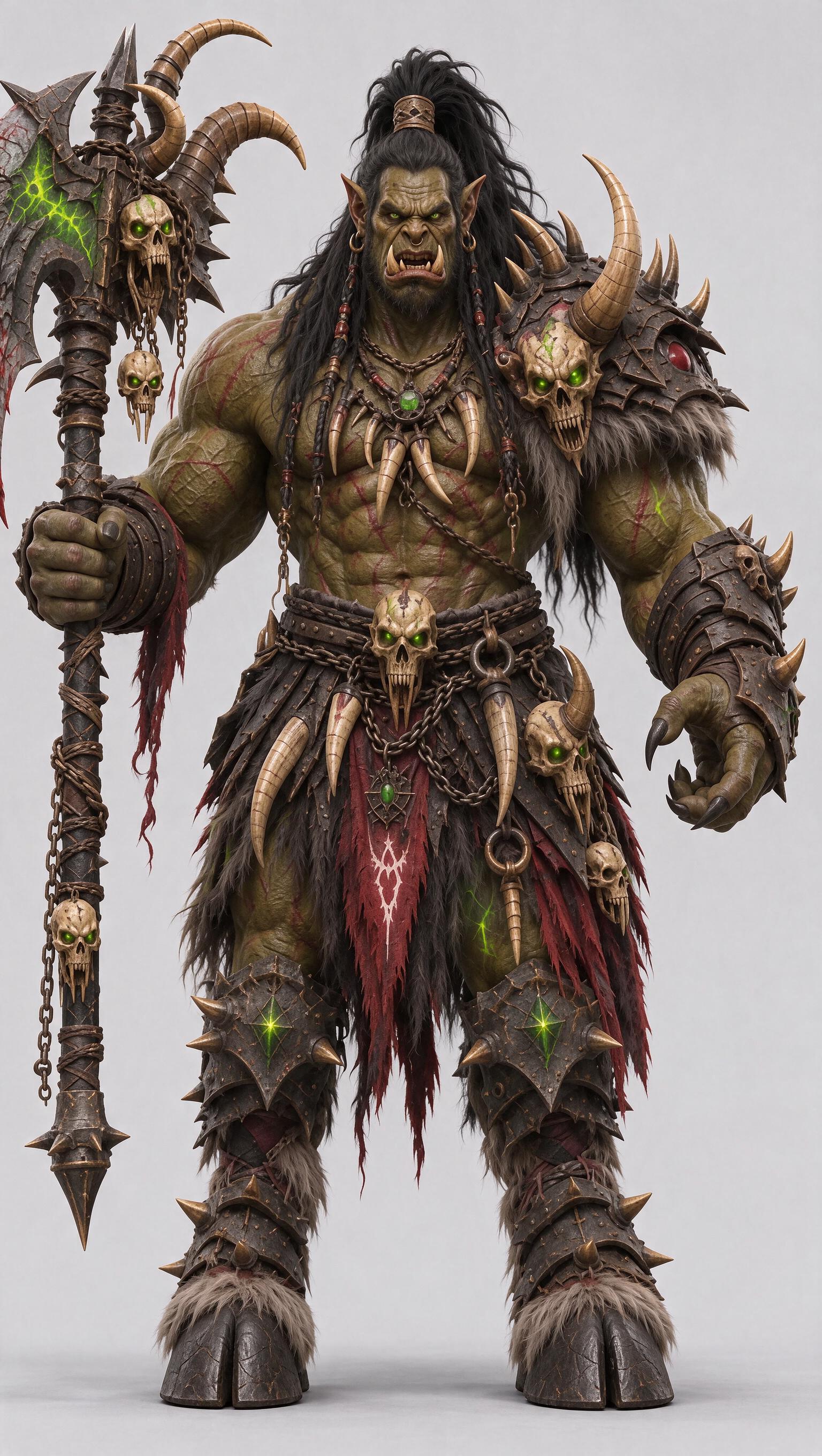
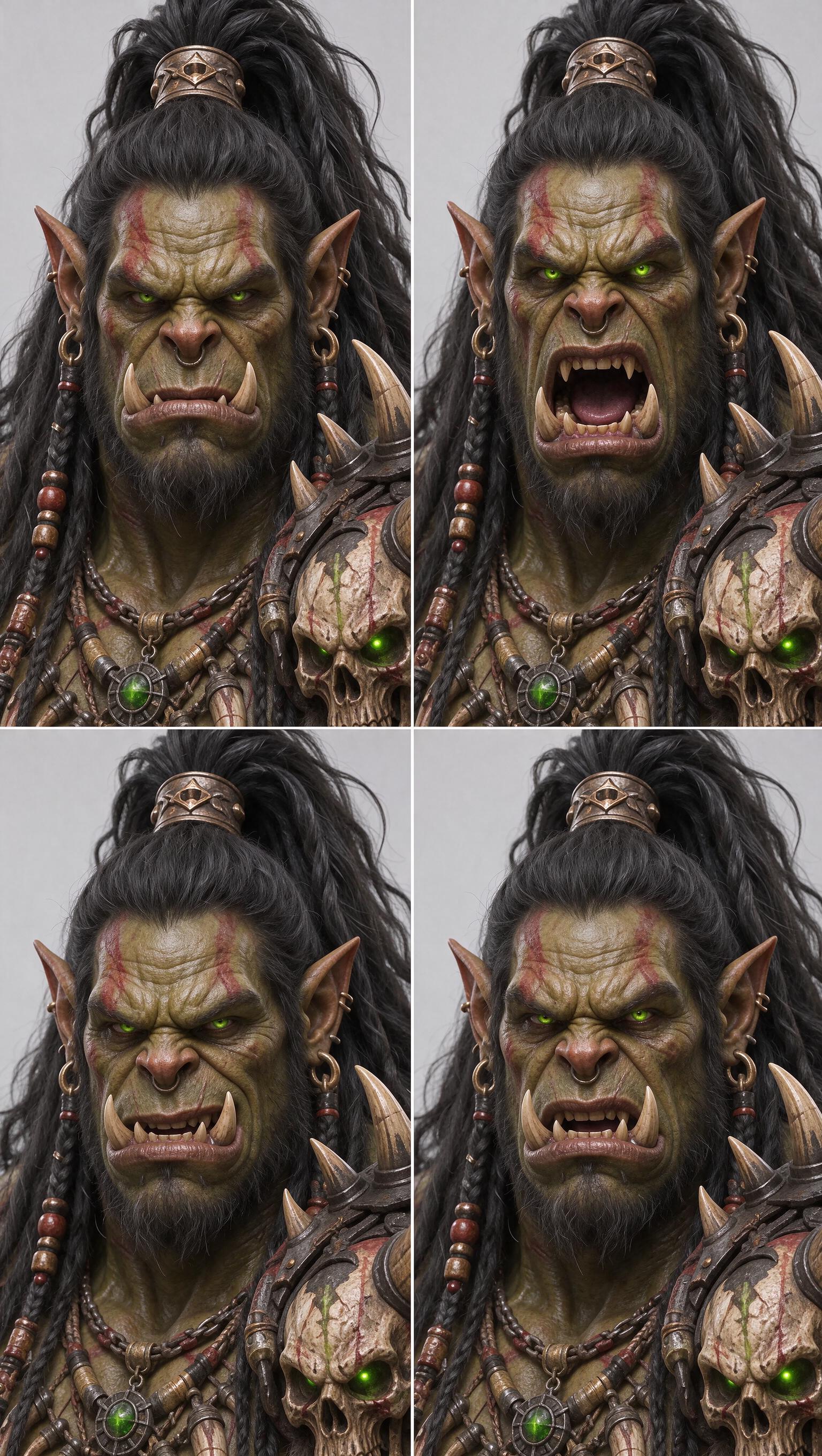
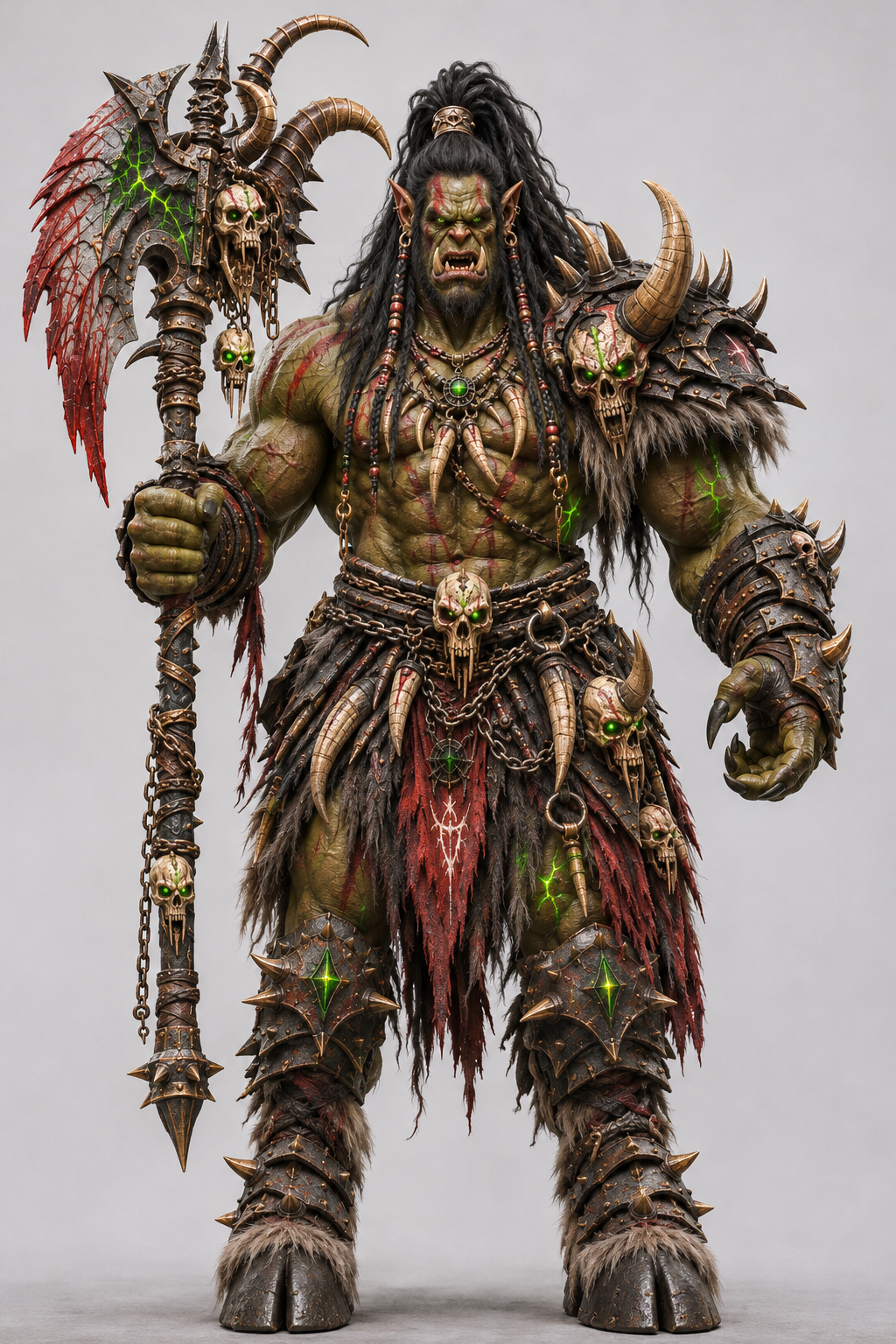
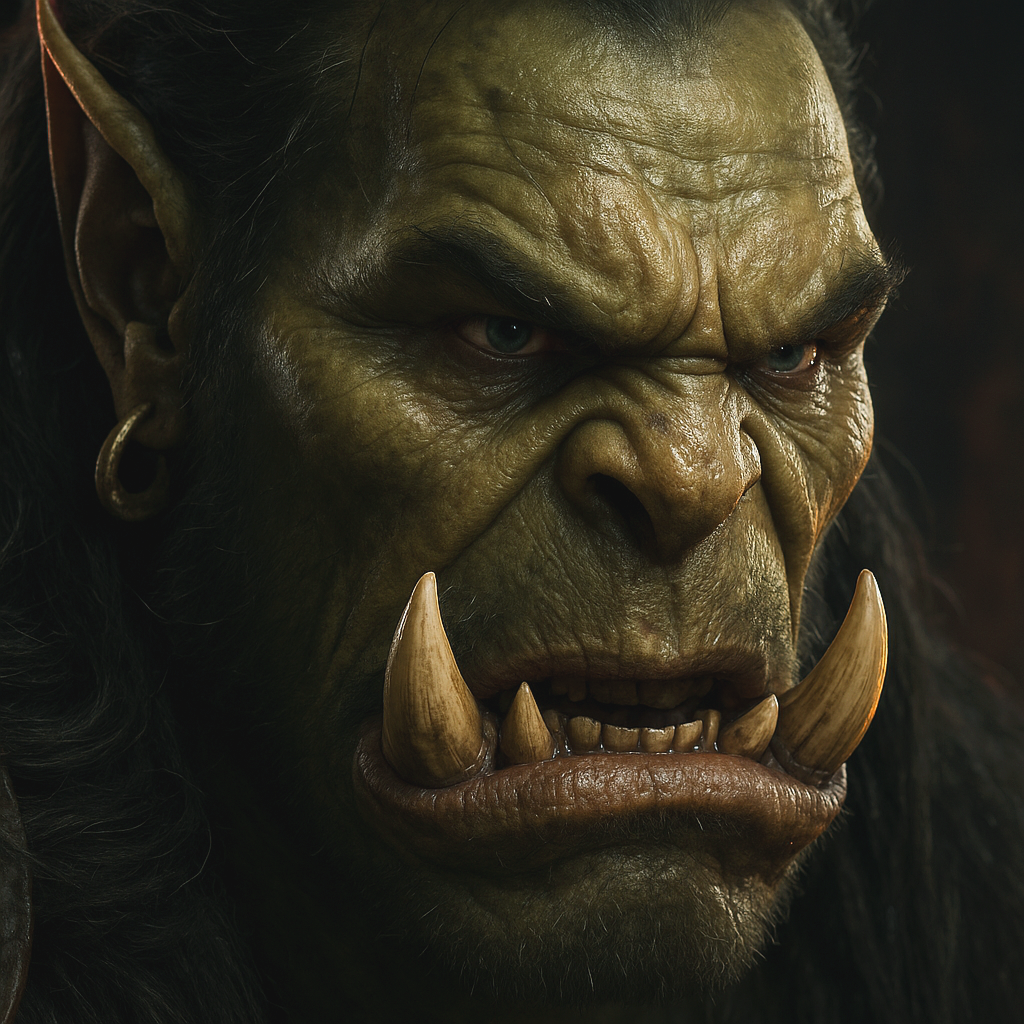
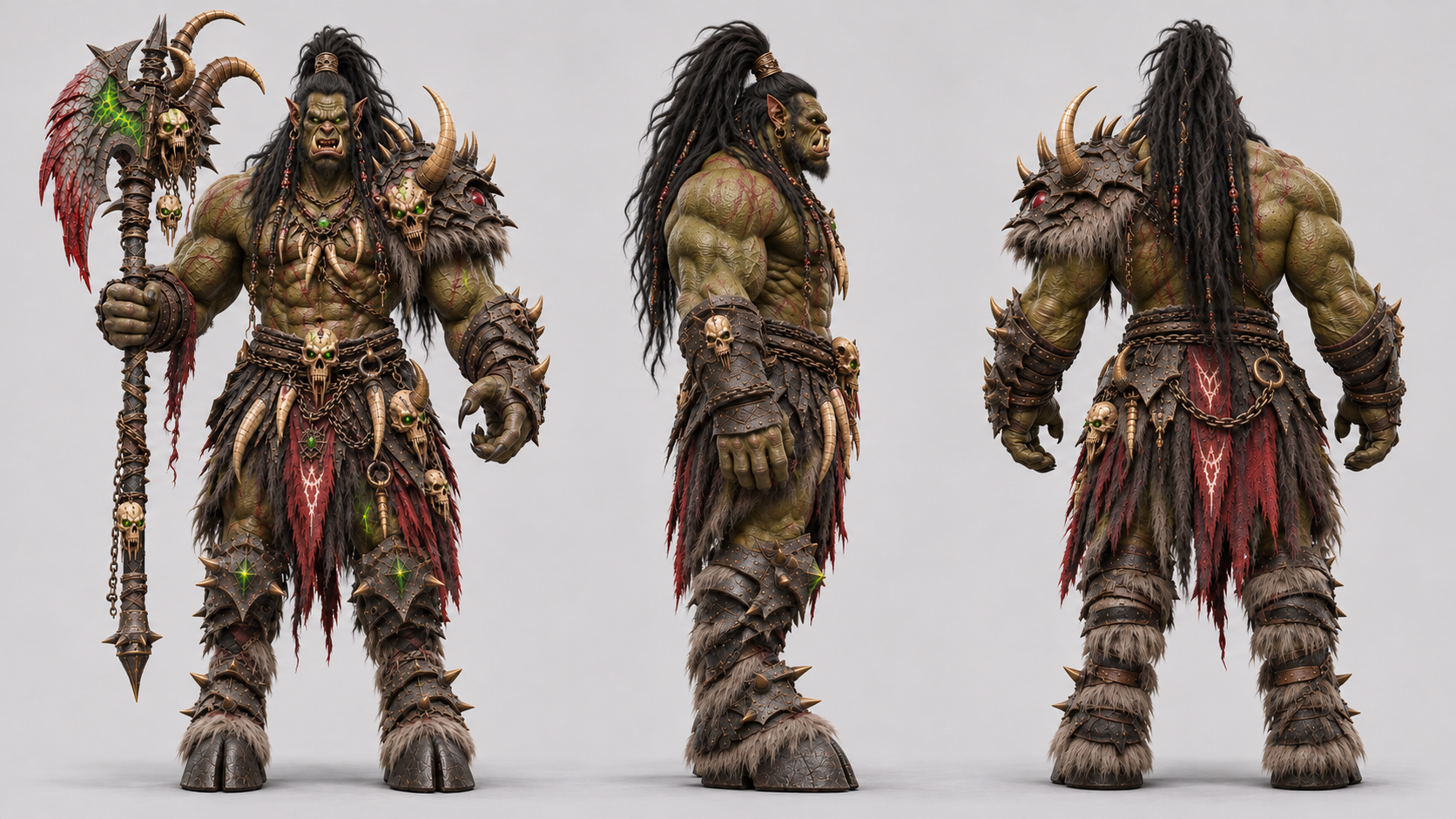
# ROAD OF WORLDS — ACT I ## PORTAL ORC — PHOTOREALISTIC SKIN MATERIAL TRANSFER ### Hollywood Cinematic Hyperrealism ### STRICT TWO-REFERENCE IMAGE EDITING Create ONE extremely photorealistic, full-body FRONT-VIEW studio photograph of the exact orc warrior shown in Reference Image 1. This is an experimental SKIN MATERIAL AND PHOTOGRAPHIC REALISM TRANSFER task. **IMPORTANT: DO NOT REDESIGN THE CHARACTER.** The objective is to retain the exact orc from Reference Image 1 while transferring the exceptionally realistic skin material, biological texture and cinematic photographic quality demonstrated in Reference Image 2. ## 1. REFERENCE IMAGE PRIORITY **REFERENCE IMAGE 1 — CHARACTER DESIGN MASTER** The three-view orc character sheet is the absolute authority for: - Character identity and facial structure. - Overall anatomy and muscular body proportions. - Broad shoulders and massive chest. - Green skin color. - Large tusks and pointed ears. - High black ponytail. - Scars and ritual markings. - Asymmetrical spiked armor. - Horned skull ornaments. - Dark fur, chains and crimson fabrics. - Armored legs and hoof-like boots. - Enormous ornate battle axe. - Frontal stance and overall silhouette. Use the LEFTMOST FRONT VIEW of Reference Image 1 as the exact composition and character-design reference. The other two views provide supplementary anatomical and costume information only. **REFERENCE IMAGE 2 — SKIN MATERIAL REFERENCE ONLY** The close-up cinematic orc portrait is the authoritative reference for: - Skin pores and fine biological microstructure. - Deep natural forehead wrinkles. - Realistic skin creases around the eyes. - Natural nose and cheek texture. - Realistic lips and mouth tissue. - Organic skin surface roughness. - Natural semi-matte and slightly oily skin highlights. - Subtle subsurface light scattering. - Realistic tonal transitions. - Convincing photographic skin detail. Transfer the MATERIAL QUALITY and REALISM of this reference. **DO NOT TRANSFER THE FACIAL SHAPE OR CHARACTER IDENTITY FROM REFERENCE IMAGE 2.** Do not copy its nose, jaw, tusks, eye shape, hairstyle, ears or expression. Reference Image 2 is a MATERIAL STUDY, not a second character-design reference. **REFERENCE PRIORITY:** 1. Exact character identity from Reference Image 1. 2. Exact anatomy, costume and weapon from Reference Image 1. 3. Realistic skin material properties from Reference Image 2. 4. Clean Hollywood-quality photographic rendering. --- ## 2. PRESERVE THE ORIGINAL ORC EXACTLY Reproduce the same enormous green-skinned orc warrior. Preserve: - The same broad facial structure. - The same glowing emerald eyes. - The same large lower tusks. - The same pointed ears. - The same facial scars and red markings. - The same long black ponytail. - The same thick neck. - The same enormous shoulder width. - The same muscular chest and abdomen. - The same massive arms and legs. - The same original asymmetrical armor. - The same horned shoulder skull. - The same chains and bone trophies. - The same dark animal fur. - The same torn crimson fabric. - The same green magical markings. - The same armored hoof-like footwear. - The same enormous decorated battle axe. Do not remove any of the recognizable details. Do not simplify the armor. Do not change the weapon. Do not change the face. Do not reduce shoulder width. Do not make the character thinner or smaller. Do not replace the orc with the character from Reference Image 2. --- ## 3. REALISTIC SKIN TRANSFER — MAIN OBJECTIVE Transform the orc's skin into extremely convincing living biological tissue. The result must closely match the photographic skin quality demonstrated in Reference Image 2. ### SKIN MICROSTRUCTURE Introduce: - Naturally varied visible pores. - Nonuniform microtexture. - Deep but anatomically correct wrinkles. - Realistic folds and creases. - Small healed scars. - Subtle skin discolorations. - Organic pigmentation variations. - Natural stretching over muscles. - Correct skin thickness around joints. - Realistic roughness variation. **The skin must NOT resemble procedural CGI bump mapping.** Do not cover the entire body with identical pores. Large areas of skin should remain naturally smooth where appropriate. Wrinkles should appear where real tissue folds or stretches. Microdetails must follow the underlying anatomy rather than appear randomly painted onto the surface. ### SKIN REFLECTANCE Match the physically realistic skin response from Reference Image 2. Use subtle natural highlights on the forehead, nose, cheeks, shoulders and upper chest. Preserve a realistic balance between matte and slightly oily areas. Subtle natural moisture is acceptable. Avoid excessive wetness. Avoid plastic-looking gloss. Avoid completely dry artificial skin. ### SUBSURFACE SCATTERING Use physically believable subsurface light transport. The skin should have subtle optical depth. Light interaction should vary naturally according to tissue thickness. Avoid waxy translucency. ### SKIN COLOR Preserve the olive-green skin identity from Reference Image 1. Use realistic darker olive shadows, muted yellow-green highlights and subtle natural variations. Do not adopt an entirely new skin color from Reference Image 2. Do not oversaturate the skin. Do not introduce neon-green skin highlights. --- ## 4. FACE — EXTREME CLOSE-INSPECTION REALISM Although the entire body is visible, the face must receive especially careful material refinement. Improve the realism of: - Forehead skin folds. - Brow ridges. - Eyelids. - Areas beneath the eyes. - Nose and nostrils. - Cheeks. - Lips. - Mouth corners. - Jaw and chin. - Areas surrounding the tusks. Make the facial skin look thick, aged, coarse and alive. The skin must possess realistic depth, not just surface texture. The brow and facial wrinkles should reflect genuine underlying facial anatomy. Preserve the character's original expression. Preserve his original tusks and teeth. Preserve his original glowing eyes. **DO NOT REPLACE THE FACE WITH THE FACE FROM REFERENCE IMAGE 2.** Only transfer the high-quality skin rendering properties. --- ## 5. BODY SKIN CONSISTENCY Apply the improved biological skin material consistently across all exposed skin: - Face. - Neck. - Shoulders. - Chest. - Abdomen. - Upper arms. - Forearms. - Hands. - Visible thighs. However, respect regional anatomical differences. Facial skin must show finer pores and deeper expression wrinkles. Shoulders and upper arms must show stretched, thick skin over large muscles. Hands must have rougher skin, deeper creases and worn knuckles. The abdomen must show natural skin folds and believable muscle transitions. Do not use the same texture uniformly over the entire body. Maintain all existing scars and magical markings in their original positions. --- ## 6. ARMOR, WEAPON AND COSTUME — DESIGN LOCK Keep the entire costume and battle axe unchanged. The transfer applies mainly to SKIN MATERIALS. All armor, weapon, fur, bone, fabric and jewelry should retain their original design. Maintain realistic forged-metal reflectance, natural fur fibers and bone surface characteristics. Do not introduce additional ornaments. Do not replace any skulls. Do not alter the horn shapes. Do not move the shoulder armor to the opposite side. Do not redesign the axe blade. Do not change the weapon grip. Do not invent new magical patterns. --- ## 7. CINEMATIC PHOTOGRAPHIC QUALITY Hollywood Cinematic Hyperrealism. High-Budget Live-Action Fantasy Feature Film. ARRI Alexa 35 photographic characteristics. Cooke S4/i professional cinema-lens aesthetic. Premium Creature Prosthetics and VFX. Extremely realistic biological skin shading. Natural optical detail. Wide dynamic range. Controlled studio illumination. Organic cinematic color reproduction. The orc must resemble a real physical creature photographed on an expensive film production stage. Not a game character. Not an illustrated fantasy monster. Not a digital character render. ### IMAGE QUALITY Highest available native resolution. Exceptionally clean photographic detail. No heavy noise. No excessive film grain. No artificial sharpening. No repetitive procedural textures. No exaggerated HDR. No waxy skin. No plastic material appearance. No muddy microdetails. No overprocessed color. No exaggerated glow. Do not simulate resolution by artificially sharpening existing pixels. Create genuinely coherent photographic material detail. --- ## 8. CAMERA, POSE AND BACKGROUND Create ONE full-body photograph. **EXACT FRONT VIEW — 0 DEGREES.** The orc faces the camera. Keep his original upright, powerful stance. Preserve the exact general body silhouette from Reference Image 1. Keep his huge original axe in his right hand, appearing on the viewer's left. Preserve the same expression and hairstyle. Include the entire figure from the top of the hair and axe horns to the bottoms of both feet. Use a seamless neutral light-gray studio background. **BACKGROUND COLOR: #E5E5E5.** Natural studio contact shadows. No landscape. No mountains. No portal. No extra characters. No dramatic action. No additional camera angles. **VERTICAL FORMAT: 2:3.** ONE CHARACTER ONLY. NO CHARACTER SHEET. NO COLLAGE. --- ## 9. STRICT NEGATIVE INSTRUCTIONS Do not redesign the orc. Do not transfer the face of Reference Image 2. Do not change facial proportions. Do not change tusks. Do not change ears. Do not change hair. Do not change eye placement. Do not reduce shoulder width. Do not change muscle proportions. Do not replace the armor. Do not change the axe. Do not move skull decorations. Do not alter red cloth arrangements. Do not change the frontal pose. Do not crop the weapon. Do not create multiple characters. Do not add backgrounds or environmental scenery. Do not produce anime, manga, illustration or game art. Do not create plastic, waxy or excessively glossy skin. Do not exaggerate skin pores. Do not oversharpen. Do not add artificial grain or noise. --- ## 10. FINAL VALIDATION Before producing the final result, verify: 1. The character is identical to the front-view orc from Reference Image 1. 2. His original face remains recognizable. 3. His shoulders remain enormous and broad. 4. All original armor and weapon elements remain intact. 5. The skin realism closely matches Reference Image 2. 6. Facial pores, wrinkles and folds look biologically convincing. 7. Skin reflections resemble real living tissue. 8. All exposed body skin has consistent material quality. 9. Green skin coloration remains faithful to Reference Image 1. 10. No facial features have been copied from Reference Image 2. 11. The pose is strictly frontal. 12. The entire body and weapon are visible. 13. The image is clear and naturally detailed. 14. The background remains neutral light gray. 15. The final result resembles a genuine Hollywood live-action creature photograph. --- # FINAL MASTER INSTRUCTION Use Reference Image 1 to preserve the EXACT ORC CHARACTER DESIGN. Use Reference Image 2 ONLY to transfer its extraordinary cinematic SKIN REALISM. Create a single full-body, strictly frontal studio photograph of the orc from Reference Image 1, with realistic skin pores, deep organic wrinkles, naturally varied roughness, subtle oily highlights, biological tissue depth and physically convincing subsurface scattering inspired by Reference Image 2. Do not transfer Reference Image 2's facial anatomy or character identity. Do not redesign the costume, weapon or body. **SAME ORC. SAME FACE. SAME ARMOR. SAME AXE. SAME PROPORTIONS.** **ONLY THE SKIN MATERIAL QUALITY IS TRANSFORMED.** Final result: an exceptionally realistic giant green-skinned orc photographed for a high-budget Hollywood fantasy feature film.

Free to start · Generate videos and images with AI in seconds
More from this creator
More Seedream 5.5 images
См. все →