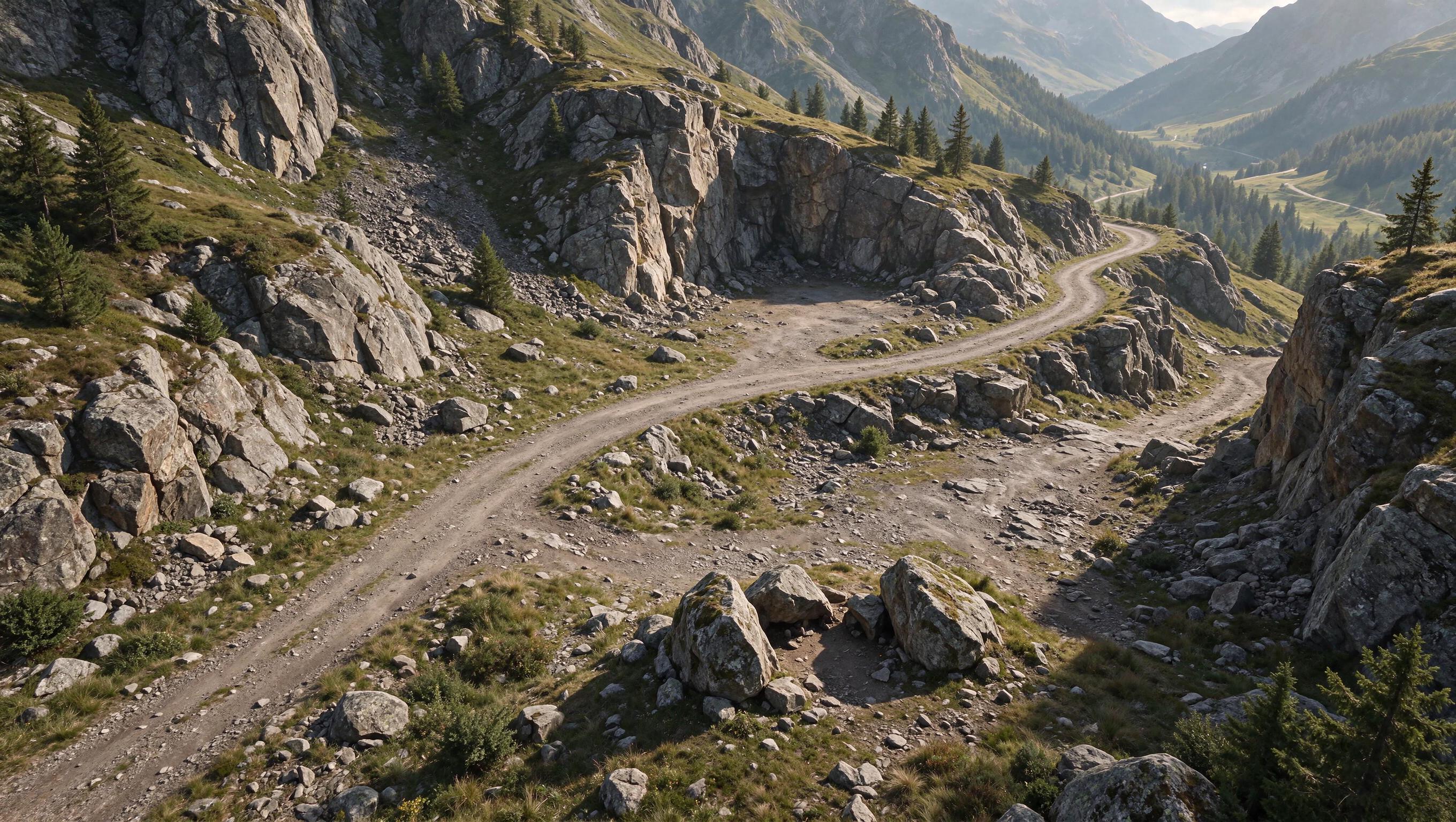
Image - 2026-11-27 07:19
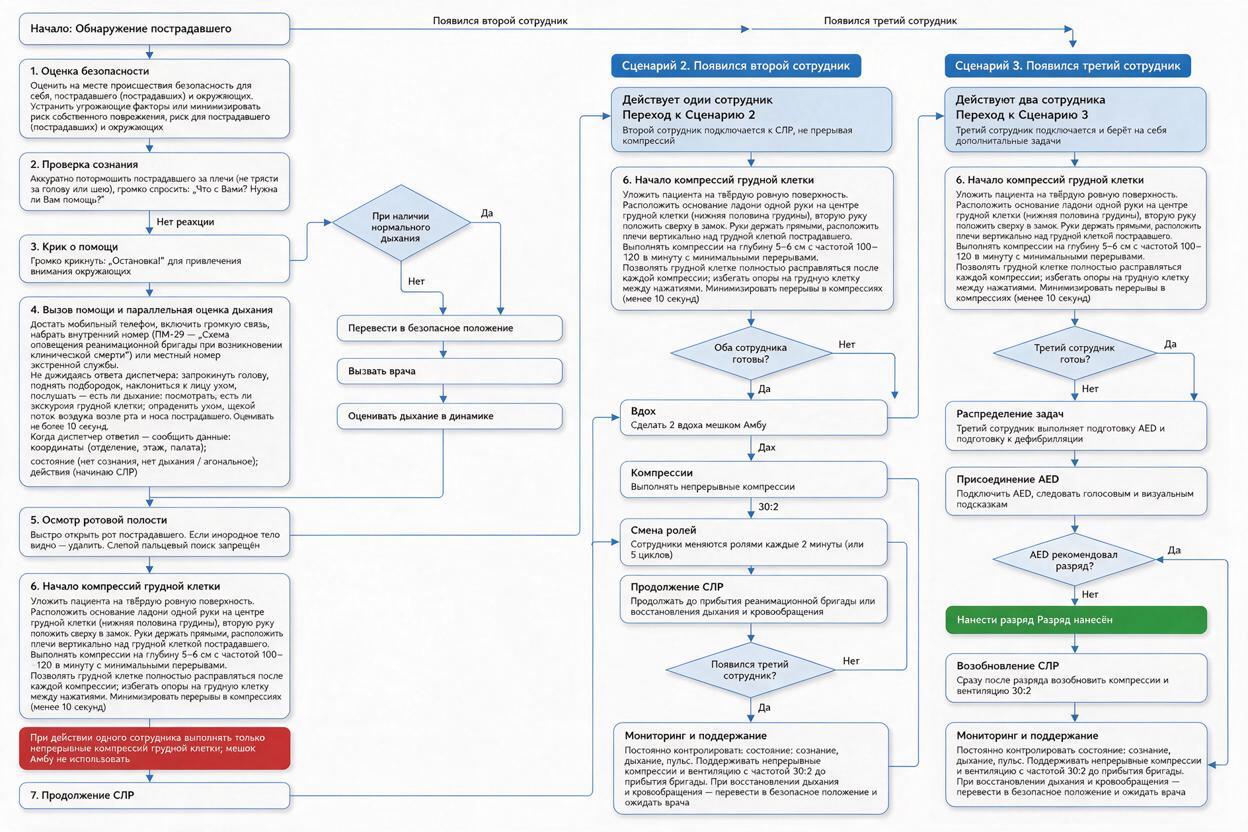
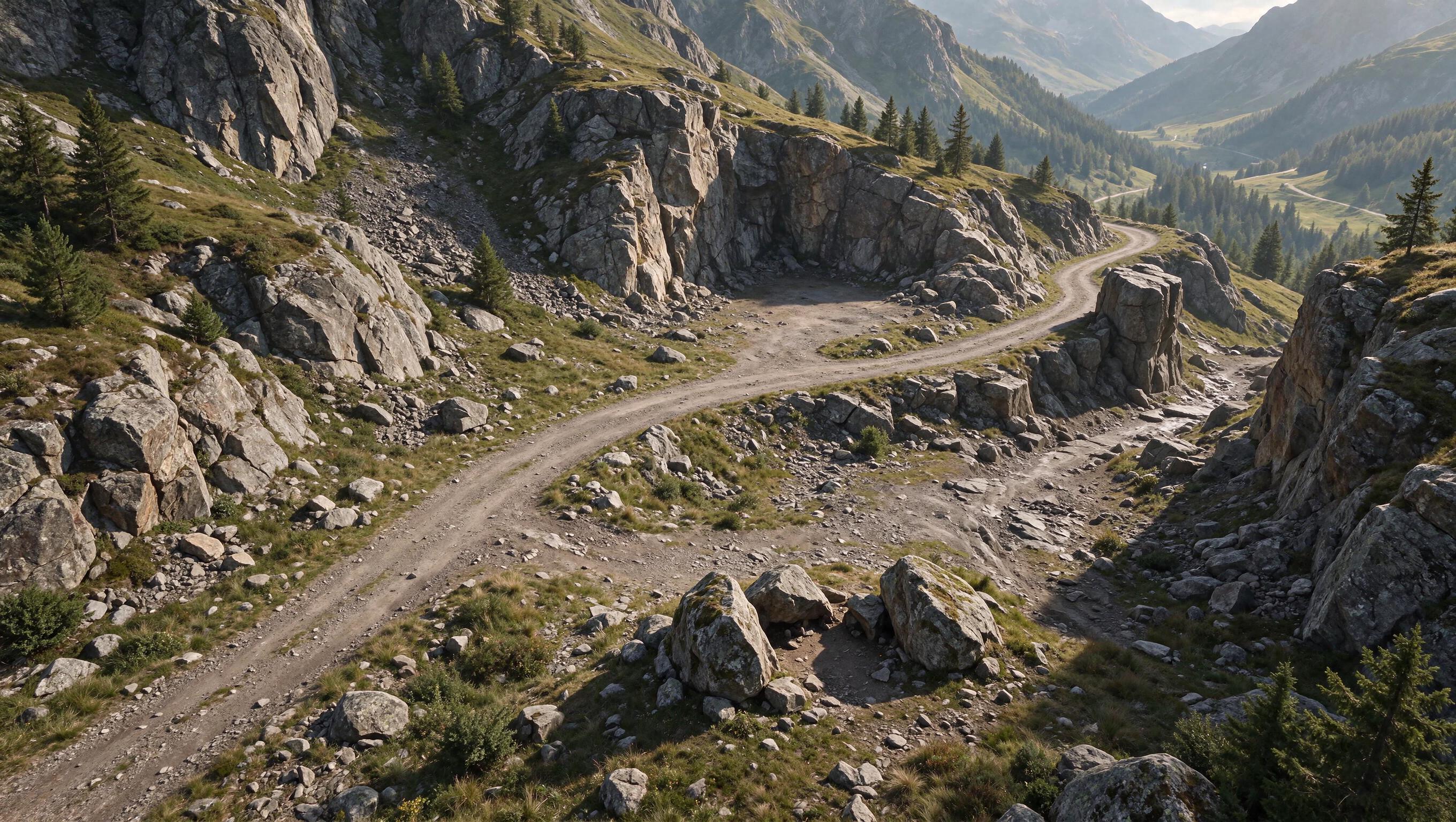
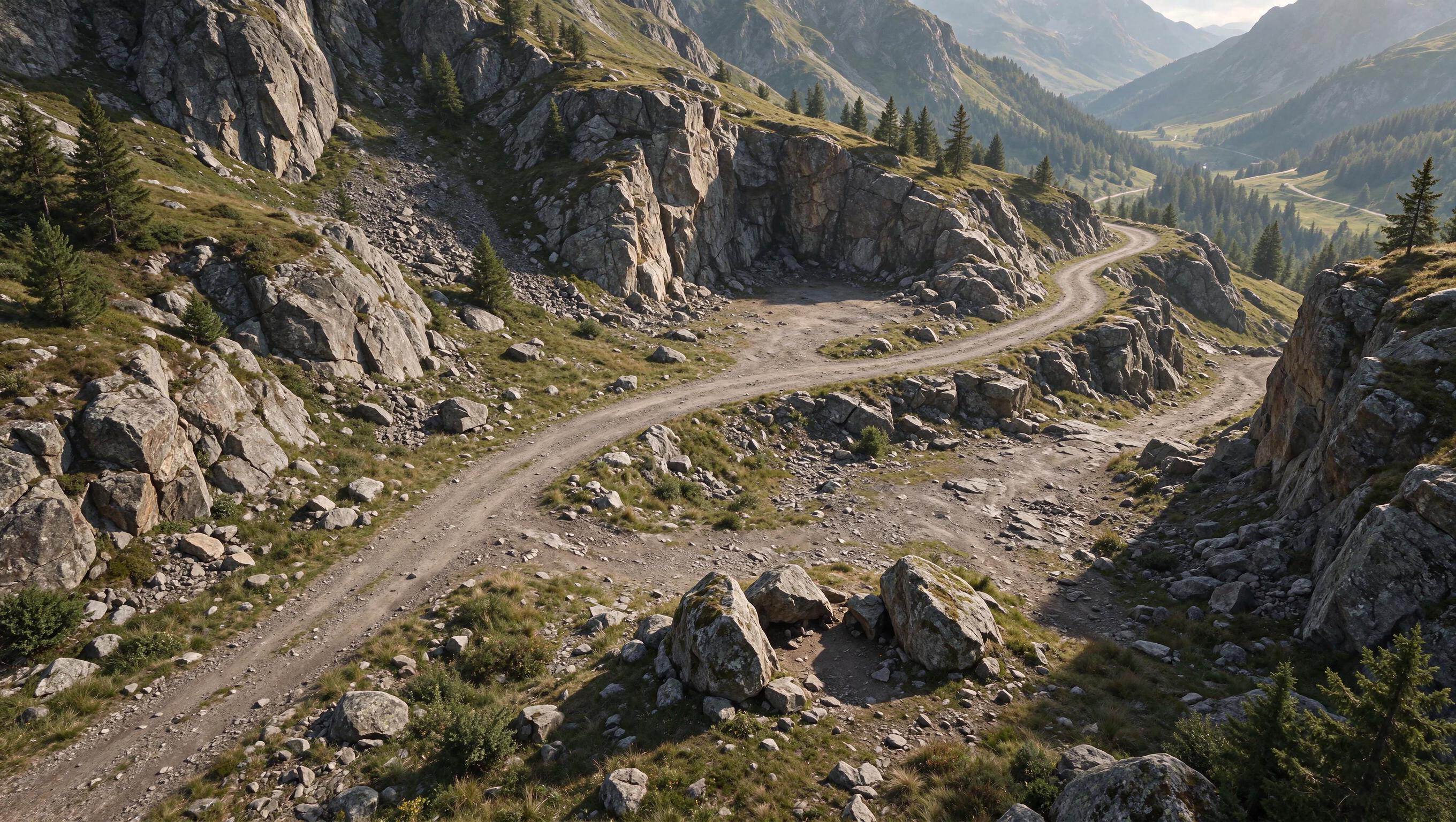
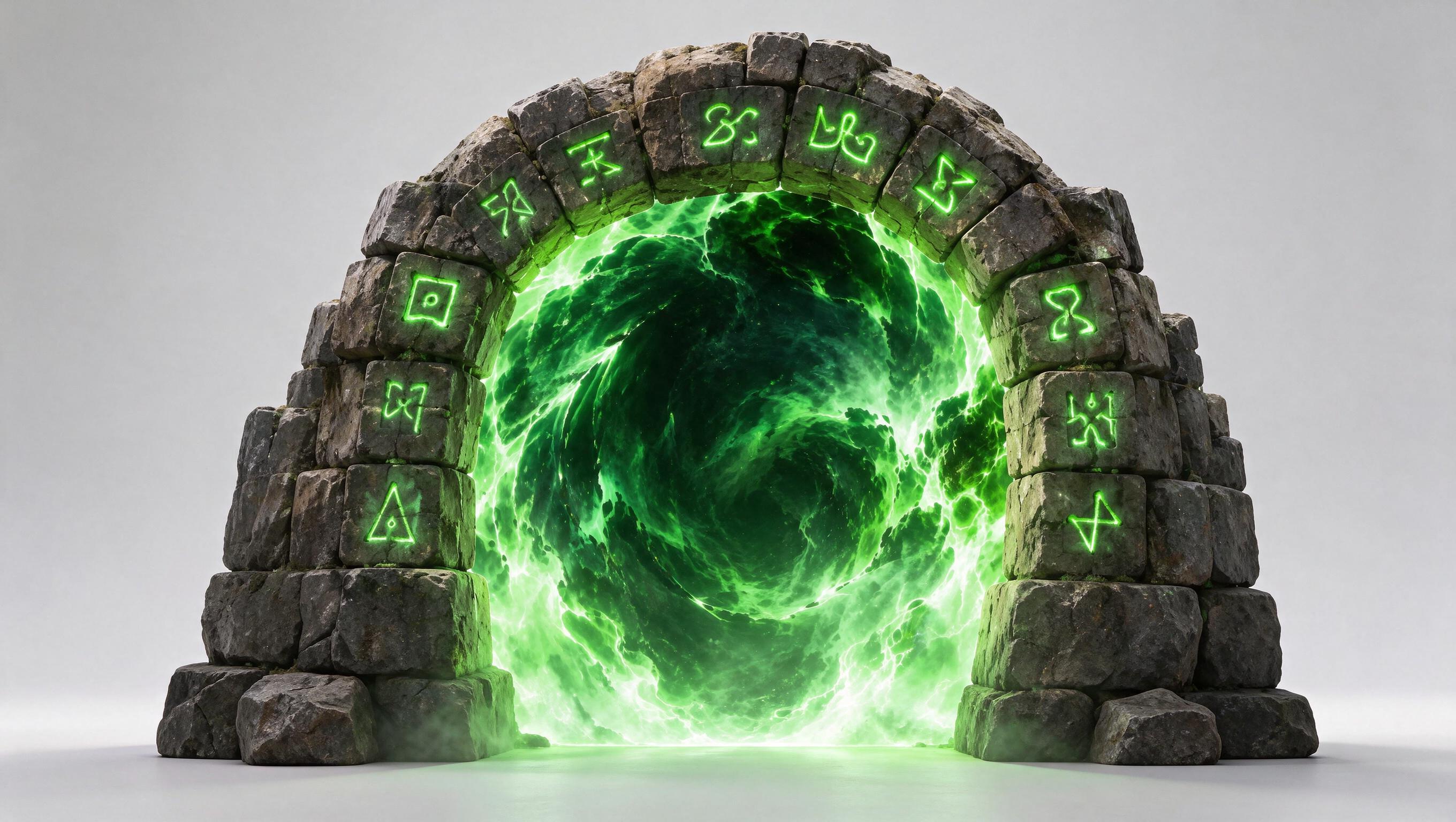
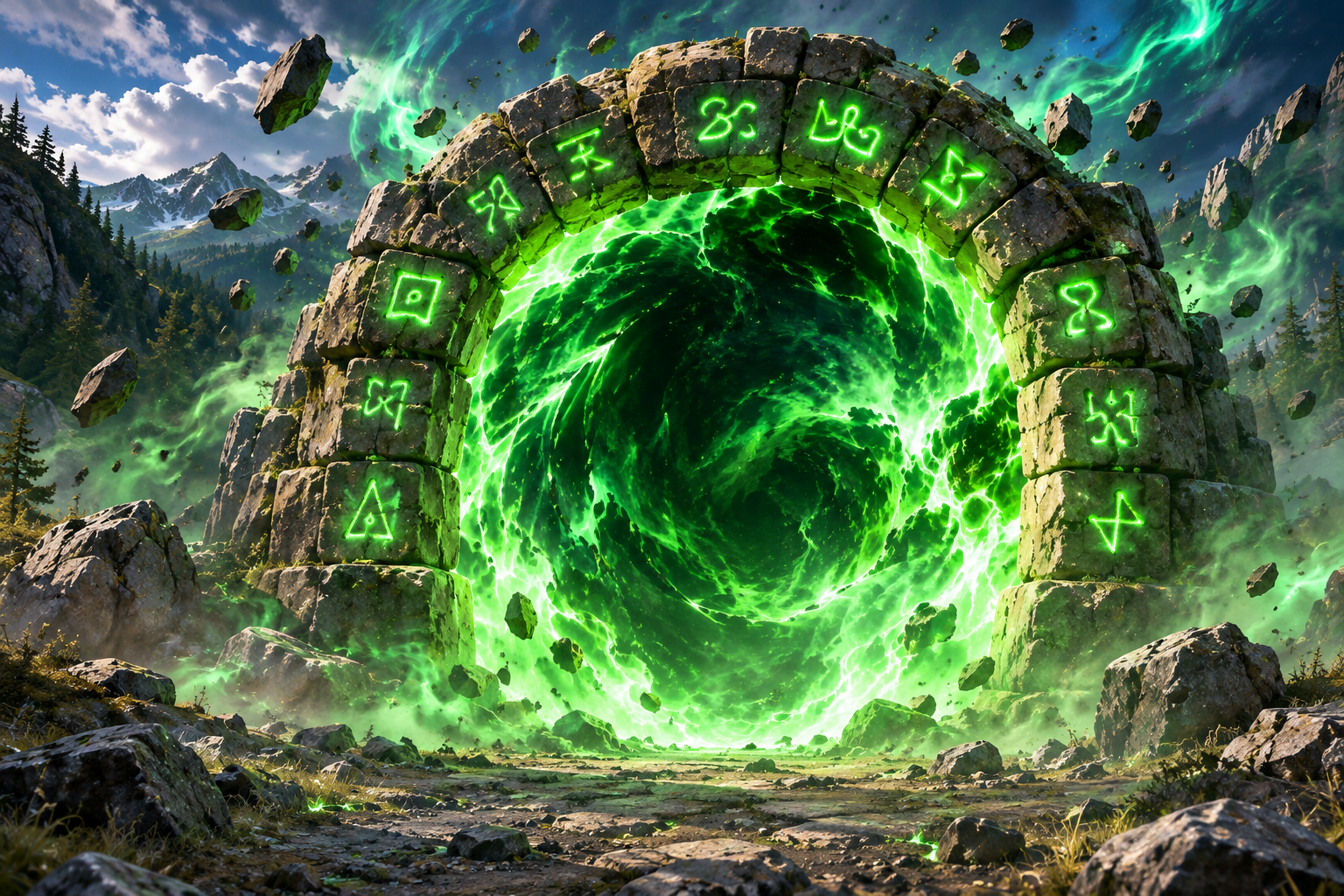
# ROAD OF WORLDS — ACT I ## LOCATION L01 — MOUNTAIN CARAVAN ROAD ### MASTER AERIAL LOCATION REFERENCE ### Hollywood Cinematic Hyperrealism — Real Landscape Photography Create ONE exceptionally photorealistic, high-resolution, elevated oblique aerial photograph of a REALISTIC mountain caravan road in a beautiful alpine valley. This image will be the OFFICIAL MASTER GEOGRAPHICAL REFERENCE for a live-action fantasy film. The entire location must be designed as ONE continuous and geographically believable natural environment. The image must clearly establish where the following future cinematic actions can occur: 1. Two medieval covered wagons travel along the mountain road. 2. A giant magical stone portal unexpectedly appears on a separate rocky clearing BESIDE the road. 3. A gigantic orc emerges from the portal and approaches the caravan. 4. The caravan stops and civilians escape behind large natural boulders. 5. A muscular soldier fights the orc across the road and surrounding terrain. 6. The soldier maneuvers toward a narrow rocky section of the SAME road for the final confrontation. **IMPORTANT: THESE ACTIONS MUST NOT BE DEPICTED YET.** The photograph must show only the EMPTY ENVIRONMENT before any supernatural event or caravan arrival. No portal. No people. No horses. No wagons. No orcs. No magical effects. The purpose is to create a permanently reusable landscape reference with absolutely clear spatial relationships. --- # 1. VISUAL STYLE — ABSOLUTE PHOTOREALISM **Photorealistic oblique aerial location photography — an actual mountain landscape photographed from a helicopter, NOT an isometric 3D game environment.** The composition must have an isometric-style overview for understanding the geography, but the environment must maintain genuine real-world photographic perspective. Hollywood Cinematic Hyperrealism. High-Budget Live-Action Feature Film. Ultra-Realistic Landscape Photography. ARRI Alexa 35 cinematic color reproduction. Professional cinema-lens optical characteristics. Natural photographic sharpness. Authentic geological formations. Realistic vegetation. Physical daylight. Atmospheric perspective. Subtle organic surface details. Accurate terrain scale. The result must look like a photograph of a real mountain location that a Hollywood film crew could visit and use as a practical shooting environment. **NOT AN ISOMETRIC DIORAMA.** **NOT A COMPUTER-GENERATED GAME MAP.** **NOT A MINIATURE LANDSCAPE MODEL.** **NOT A CONCEPT-ART ILLUSTRATION.** The terrain must exist naturally beyond the image boundaries. No cutaway terrain blocks. No exposed vertical sides of a landscape model. No black background. No floating terrain. --- # 2. CAMERA — ELEVATED OBLIQUE AERIAL OVERVIEW Create ONE continuous wide establishing photograph. Camera position: - Elevated above the valley floor, approximately 45–65 meters. - Oblique downward viewing angle approximately 35–40 degrees. - Looking diagonally across the caravan road toward the distant mountain cliffs. - Natural photographic perspective. - Wide enough to understand the entire action area. - Close enough to distinguish individual boulders, the road surface, the portal clearing and the narrow passage. The camera is positioned on the NEAR SIDE of the mountain road, looking toward the FAR SIDE where the portal clearing will eventually be located. The viewer must clearly see the road, the natural open terrain, the rocky portal clearing and the surrounding boulders in ONE image. Do not use a vertical 90-degree top-down map view. Do not use a ground-level camera. Do not use exaggerated fisheye perspective. Do not create extreme cinematic depth-of-field blur. All important terrain zones must remain readable. The background mountains may show natural atmospheric softness. **FORMAT: ONE 16:9 LANDSCAPE IMAGE.** Maximum available native image quality. No collage. No storyboard panels. No labels or infographic decorations. --- # 3. MASTER GEOGRAPHY — VERY IMPORTANT The landscape consists of ONE large, natural, continuous mountain road passing through a broad rocky alpine valley. The road must be physically continuous and clearly traversable by a medieval caravan. **THE ROAD MUST ENTER THE IMAGE FROM THE LOWER LEFT FOREGROUND AND CONTINUE ALL THE WAY THROUGH THE LANDSCAPE, EXITING TOWARD THE UPPER RIGHT BACKGROUND.** The road cannot terminate at the cliffs. The road cannot terminate at the portal clearing. The road cannot suddenly disappear. The road cannot lead into a dead end. The road cannot be blocked by a rock wall. The road cannot become a tunnel. The road cannot end at a fantasy gate. The road MUST visibly continue around the natural rock formations toward the distant valley. **ABSOLUTELY CRITICAL:** The magical portal appears beside an existing road. The road was built or formed for normal travel between distant settlements. It does NOT exist to lead toward the portal. The portal is an unexpected supernatural event, not an intended destination for the caravan. The environment must visually communicate this distinction. --- # 4. ZONE A — MAIN CARAVAN ROAD Position: From the LOWER LEFT foreground, diagonally through the CENTER of the image, toward the UPPER RIGHT background. Create a genuine medieval mountain dirt-and-gravel road. Approximate road width: 4–5 meters along most of its length. The road must be wide enough for two harnessed horses and a covered wooden wagon. The surface contains: - Naturally compacted earth. - Uneven gravel. - Irregular small rocks. - Weathered wheel ruts from generations of wagon travel. - Subtle hoof-worn patches. - Areas of dry dusty soil. - Occasional exposed bedrock. - Sparse grass growing along the margins. - Natural changes in elevation. - Small shallow depressions. - Believable erosion and drainage. The road should curve gradually according to the surrounding mountain geology. No perfectly straight artificial road. No modern asphalt. No concrete. No road markings. No modern barriers. No railway tracks. No unusually wide highway. **CAMERA COMPOSITION:** The lower-left portion of the road must provide a visually readable place where the two future covered wagons can enter the scene. The middle portion must provide sufficient space for the future caravan to stop. The upper-right section must remain connected to the distant road exit. The complete travel path must be understandable from the aerial image alone. --- # 5. ZONE B — PORTAL CLEARING ## CRITICAL ENVIRONMENTAL FEATURE Position: UPPER CENTRAL-RIGHT area of the composition, on the FAR SIDE of the main road, at the base of a distinctive natural rocky cliff. Create a roughly level, natural rocky-earth clearing large enough to accommodate a future six-meter-tall ancient stone portal. The future portal is approximately: - 5.5–6 meters tall. - Approximately 7–8 meters wide externally. - Extremely heavy stone construction. Therefore, the clearing must be approximately 12–16 meters across, with enough stable ground for both stone bases. This is only a PLANNED INSERTION AREA. **DO NOT GENERATE THE PORTAL.** The clearing must remain empty. The terrain should consist of: - Natural compacted gravel. - Exposed weathered bedrock. - Sparse dry grass. - Scattered small natural stones. - Slightly uneven but reasonably stable ground. - Natural mountain slope transition. - Rocky cliff face behind the clearing. The clearing should be approximately 8–15 meters away from the main road, separated only by natural open rocky ground. There must be an unobstructed physical route from the clearing to the road. A gigantic orc must later be able to emerge from the portal, move forward from the clearing and reach the caravan without climbing cliffs, crossing impassable ravines or squeezing through narrow gaps. **IMPORTANT ROAD RELATIONSHIP:** The portal clearing is BESIDE the road, not at the end of it. The main road passes in front of this area and continues toward the upper-right background. The portal clearing must NOT block this continuation. The portal clearing must NOT look like a road terminus. The portal clearing must NOT look like a cave entrance. **DO NOT ADD:** - Stone arches. - Ring-shaped monuments. - Circular foundations. - Magic symbols. - Green glow. - Stone platforms. - Stairs. - Decorative ruins. - Prepared ritual circles. - Artificial circular craters. - Portal-shaped gaps in cliffs. The location must appear completely ordinary before the supernatural event begins. The future portal will be inserted later using a separate approved reference photograph. --- # 6. ZONE C — MAIN BATTLE AREA Position: CENTER-RIGHT area, between the portal clearing and the caravan stopping area. Create an open but naturally uneven patch of mountain terrain directly connected to the roadside. This is where the future orc can charge toward the caravan and where the soldier can maneuver, shoot and avoid attacks. The area should be approximately 10–15 meters across, including the road shoulder and adjacent open ground. The road itself remains approximately 4–5 meters wide. Do not artificially widen the entire road. Instead, provide additional natural open ground beside it. The ground contains: - Compact earth. - Rocky gravel. - Scattered stones. - Small boulders. - A few isolated patches of grass. - Natural cracks in exposed rock. - Gentle elevation changes. - Dusty sections. - A distinctive isolated heavy stone that may later provide temporary cover. Ensure sufficient space for believable physical action involving a gigantic armored orc and a human soldier. The orc must have enough room to swing a very large axe. The soldier must have several possible positions to move between. The battle must not be constrained to a tiny corridor. **CRITICAL:** This action area must be connected continuously to BOTH the portal clearing and the main caravan road. There must be no invisible wall, deep trench or impenetrable rock barrier separating them. --- # 7. ZONE D — LARGE BOULDER SHELTER FOR CIVILIANS Position: LOWER CENTRAL-RIGHT foreground, on the NEAR SIDE of the caravan road, relatively close to where the wagons will eventually stop. Create a distinctive natural cluster of three or four large irregular mountain boulders. Approximate boulder heights: 1.5–2.5 meters. These rocks serve as future physical cover for: - A medieval wagon driver. - Other frightened travelers. - Three young children. The boulders must be large enough to completely conceal several crouching people from the portal and the approaching orc. **SPATIAL REQUIREMENTS:** The boulder cluster must be located away from the direct path between the portal clearing and the stationary wagons. There must be a reasonably open route from the road to the sheltered side of these rocks. Several people must be able to run there without climbing steep terrain. Behind the boulders, create a small sheltered patch of naturally level ground large enough for approximately four to six crouching people. The protected area must be on the side facing AWAY from the portal clearing and battle zone. **IMPORTANT:** This is NOT a cave. This is NOT a stone bunker. This is NOT a ruined building. This is a realistic cluster of naturally weathered large mountain rocks. The boulders must remain recognizable as unique geographic landmarks in future close-up cinematic shots. --- # 8. ZONE E — NARROW ROCKY SECTION FOR THE FINAL BATTLE Position: Along the SAME continuous road, farther toward the RIGHT side of the composition, before the road continues into the upper-right background. Create a naturally narrower stretch of road between substantial rocky outcrops. Approximate road width at the narrowest point: 3.5–4 meters. The passage must remain traversable by horses and a medieval wagon. It must not form a complete obstruction. This will be used for the future scene where the soldier draws the orc toward more restricted terrain. **ESSENTIAL FEATURES:** - Two naturally protruding rocky formations. - A distinctive large natural stone buttress or pillar near one side. - Realistic weathering and cracks. - A modest rocky ledge. - Firm ground suitable for running and fighting. - A continuous road leading through the constriction. One of these rock formations must provide a recognizable hard obstacle that the soldier can use while evading an axe strike. The massive orc must be able to enter the passage. However, the surrounding rocks restrict the orc's lateral movement. **IMPORTANT:** The narrow road MUST continue beyond this point. It is NOT a dead end. It is NOT a sealed canyon. It is NOT a tunnel. It is NOT a collapsed bridge. The caravan road must remain geographically logical and visibly connected to the distant valley. --- # 9. ZONE F — NATURAL ROCK CLIFFS AND MOUNTAINS Surround the valley with impressive but geographically believable alpine mountain terrain. The cliffs must look like genuine geological formations photographed in nature. Use: - Large weathered gray and gray-brown rock faces. - Realistic geological fractures. - Non-repeating layered mineral structures. - Natural erosion patterns. - Uneven cliff edges. - Small ledges. - Realistic rockfall accumulations. - Broken stone fragments. - Sparse mountain vegetation rooted in cracks. - Patches of natural moss. - Occasional exposed lighter mineral surfaces. The large rocky cliff behind the portal clearing must be a particularly recognizable landmark. It should have an irregular, distinctive silhouette. This cliff must be visible in multiple future camera angles and serve as a permanent visual anchor for the portal's location. **REALISTIC GEOGRAPHY:** Avoid uniform vertical rock walls that make the valley resemble an artificial maze. Avoid symmetrical rock formations. Avoid repeated cliff textures. Avoid perfectly arranged stone corridors. Avoid fantasy architecture. The landscape must resemble an authentic alpine mountain pass shaped by geological processes over millions of years. --- # 10. VEGETATION AND TERRAIN DETAILS Create a natural alpine valley with believable vegetation. Include: - Real coniferous trees. - Small clusters of pine and spruce. - Natural mountain grasses of varying lengths. - Low shrubs. - Occasional wildflowers. - Sparse groundcover. - Small plants growing among rocks. - Naturally weathered tree roots and soil. Vegetation must vary naturally according to terrain. More trees grow on sheltered slopes. Fewer trees grow on bare rocky ground. The main battle area and portal clearing remain relatively open. Do not cover these important spaces with trees or bushes. The boulder shelter remains accessible. The road remains clearly readable. **STRICT NATURALISM:** No repeated tree models. No artificial grass carpet. No perfectly spaced vegetation. No oversaturated fantasy greenery. No colorful glowing plants. No obviously procedural ground textures. --- # 11. DISTANT LANDSCAPE AND ROAD CONTINUATION In the upper-right background, show the caravan road continuing beyond the narrow rocky section. It should curve naturally around a mountain outcrop and lead toward a distant green valley. This continuation is essential. It visually proves that the caravan was traveling along a normal route rather than heading into a dead end. The distant landscape may show: - Rolling alpine foothills. - Faraway conifer forests. - Layered mountain ridges. - A broad natural valley. - Subtle atmospheric haze. - Remote rocky peaks. The road should remain visibly continuous until it naturally disappears into the distance. **DO NOT place the portal clearing at the endpoint of the road.** The portal is an unexpected event occurring BESIDE the travel route. --- # 12. SUNLIGHT AND ATMOSPHERE Lighting: realistic late-afternoon daylight. Clear or partly cloudy mountain sky. Warm but restrained natural sunlight illuminates portions of the valley. Subtle cooler shadows beneath rocks and trees. Realistic atmospheric depth. Soft distant mountain haze. Natural contact shadows. Physically plausible light direction. The entire location must have consistent illumination. **THIS IS THE NORMAL WORLD BEFORE THE PORTAL APPEARS.** Therefore: - No supernatural clouds. - No green magical light. - No ominous atmospheric distortion. - No floating debris. - No magical storm. - No glowing ground. - No fire. - No smoke. The landscape is peaceful, believable and naturally beautiful. The supernatural disturbance will be introduced later during the trailer. --- # 13. CLEAN PHOTOGRAPHIC IMAGE QUALITY Highest available native output quality. Ultra-realistic location photography. Exceptional natural image clarity. Detailed stone surfaces. Natural grass and tree textures. Physically plausible terrain. Controlled local contrast. Realistic shadow gradients. Wide dynamic range. No excessive HDR. No artificial sharpness. No crunchy rocks. No oversharpened grass. No repeated visual noise. No grainy texture generation. No muddy details. No blurry rock faces. No waxy surfaces. No plastic stones. No cartoon vegetation. No exaggerated bloom. No miniature appearance. The landscape must look like a genuine photograph taken from a helicopter. Real photographic microdetail is more important than excessive generated detail. --- # 14. STRICT COMPOSITION RULES The final image MUST clearly communicate the geography in ONE frame. The following elements must all be visible simultaneously: **LOWER LEFT:** Continuous mountain road entering the scene. **CENTER-LEFT:** Open road segment where two covered wagons will eventually travel and stop. **UPPER CENTER-RIGHT, FAR SIDE OF THE ROAD:** Empty rocky clearing reserved for the future magical portal. **CENTER-RIGHT:** Open connected terrain reserved for combat between the soldier and the orc. **LOWER CENTER-RIGHT, NEAR SIDE OF THE ROAD:** Cluster of large protective boulders reserved for civilians. **RIGHT SIDE:** Naturally narrower section of the road with a distinctive stone outcrop. **UPPER RIGHT BACKGROUND:** Road clearly continuing into the distant landscape. **BACKGROUND:** Realistic rocky cliffs, conifers and alpine mountains. All zones must belong to the SAME geographical location. All distances and spatial relationships must make physical sense. The viewer must understand how a person could walk or run between these areas. --- # 15. ABSOLUTE NEGATIVE REQUIREMENTS NO PORTAL. NO GREEN ENERGY. NO WAGONS. NO HORSES. NO PEOPLE. NO SOLDIERS. NO ORCS. NO CREATURES. NO MAGICAL EFFECTS. NO CRATERS. NO ARTIFICIAL PORTAL FOUNDATIONS. NO STONE GATEWAY. NO RUINED TEMPLE. NO DECORATIVE COLUMNS. NO CASTLE. NO VILLAGE. NO MODERN OBJECTS. NO BUILDINGS. NO DEAD-END ROAD. NO ROAD BLOCKED BY CLIFFS. NO TUNNELS. NO IMPASSABLE CHASM. NO BRIDGE. NO ROAD LEADING DIRECTLY INTO THE FUTURE PORTAL CLEARING. NO EXTRA BRANCHING ROADS. NO UNNECESSARY SEPARATE LOCATIONS. NO GAME MAP STYLE. NO VIDEO-GAME GRAPHICS. NO ARTIFICIAL ISOMETRIC DIORAMA. NO MINIATURE LANDSCAPE. NO TERRAIN CUTAWAY. NO BLACK BACKGROUND. NO MAP INTERFACE. NO ANNOTATIONS. NO ARROWS. NO NUMBERED MARKERS. NO TEXT LABELS. NO LEGEND. NO INSET CAMERA VIEWS. NO MULTIPLE PANELS. NO STORYBOARD. NO POSTER DESIGN. NO WATERMARKS. --- # 16. FINAL GEOGRAPHICAL VALIDATION — MANDATORY Before finalizing the image, verify each requirement: 1. Exactly ONE geographically continuous mountain landscape. 2. Road enters from the lower-left foreground. 3. Road passes through the central caravan staging area. 4. Road continues toward the upper-right background. 5. Road has NO dead end. 6. Road remains wide enough for a horse-drawn wagon. 7. Portal clearing is located BESIDE the road. 8. Portal clearing is EMPTY. 9. Portal clearing is large enough for a six-meter stone gateway. 10. Portal clearing is physically accessible from the road. 11. The portal clearing does not block normal travel. 12. An open battle area connects the portal clearing with the road. 13. Large natural boulders provide safe civilian cover. 14. The protective side of these boulders faces away from the portal. 15. The civilians can reach the shelter from the wagon stopping area. 16. A narrow rocky section exists farther along the same road. 17. A distinctive natural stone buttress exists beside the narrow section. 18. The road continues beyond the narrow section. 19. Cliffs, terrain and vegetation look geologically realistic. 20. The portal clearing, battle area and shelter are all visible in the master image. 21. No people, vehicles, portals or supernatural effects are present. 22. The camera shows an elevated oblique aerial overview. 23. The visual result resembles actual helicopter landscape photography. 24. No text, labels, overlays, diagrams or additional image panels appear. 25. All elements are sufficiently distinct for consistent future cinematic camera angles. # FINAL MASTER INSTRUCTION Create ONE breathtakingly realistic, continuous alpine mountain-pass landscape photographed from a moderately elevated oblique aerial camera. A rugged medieval caravan road enters from the lower left, winds through a wide natural valley, passes an EMPTY rocky clearing on its FAR SIDE, moves past large boulder shelters on its NEAR SIDE, narrows briefly between rocky outcrops, and continues clearly into the distant upper-right valley. The empty clearing must provide a future location for the approved six-meter-tall magical stone portal without obstructing the road. The geography must support caravan travel, civilian evacuation, large-scale physical combat and a tactical confrontation among rocks. NO portal, NO wagons, NO characters, NO text, NO artificial diorama. **ONE LOCATION. ONE CONTINUOUS ROAD. ONE EMPTY PORTAL CLEARING. REAL PHOTOGRAPHIC GEOGRAPHY.** This image will define the unchanging spatial geography of LOCATION L01 for every subsequent cinematic shot of ROAD OF WORLDS — ACT I.

Free to start · Generate videos and images with AI in seconds
More from this creator


More Seedream 5.5 images
См. все →