Image - 2026-11-26 20:52
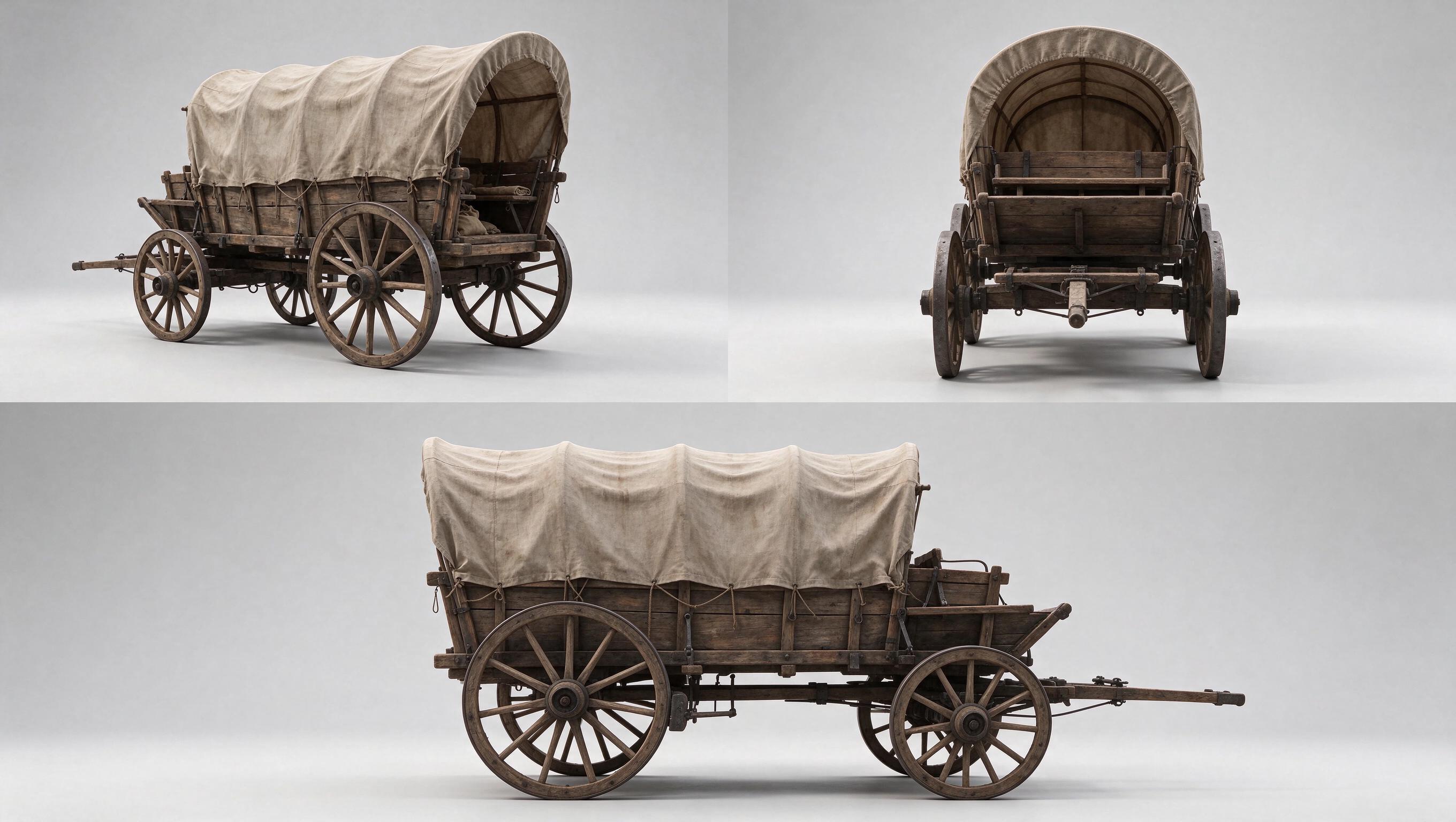
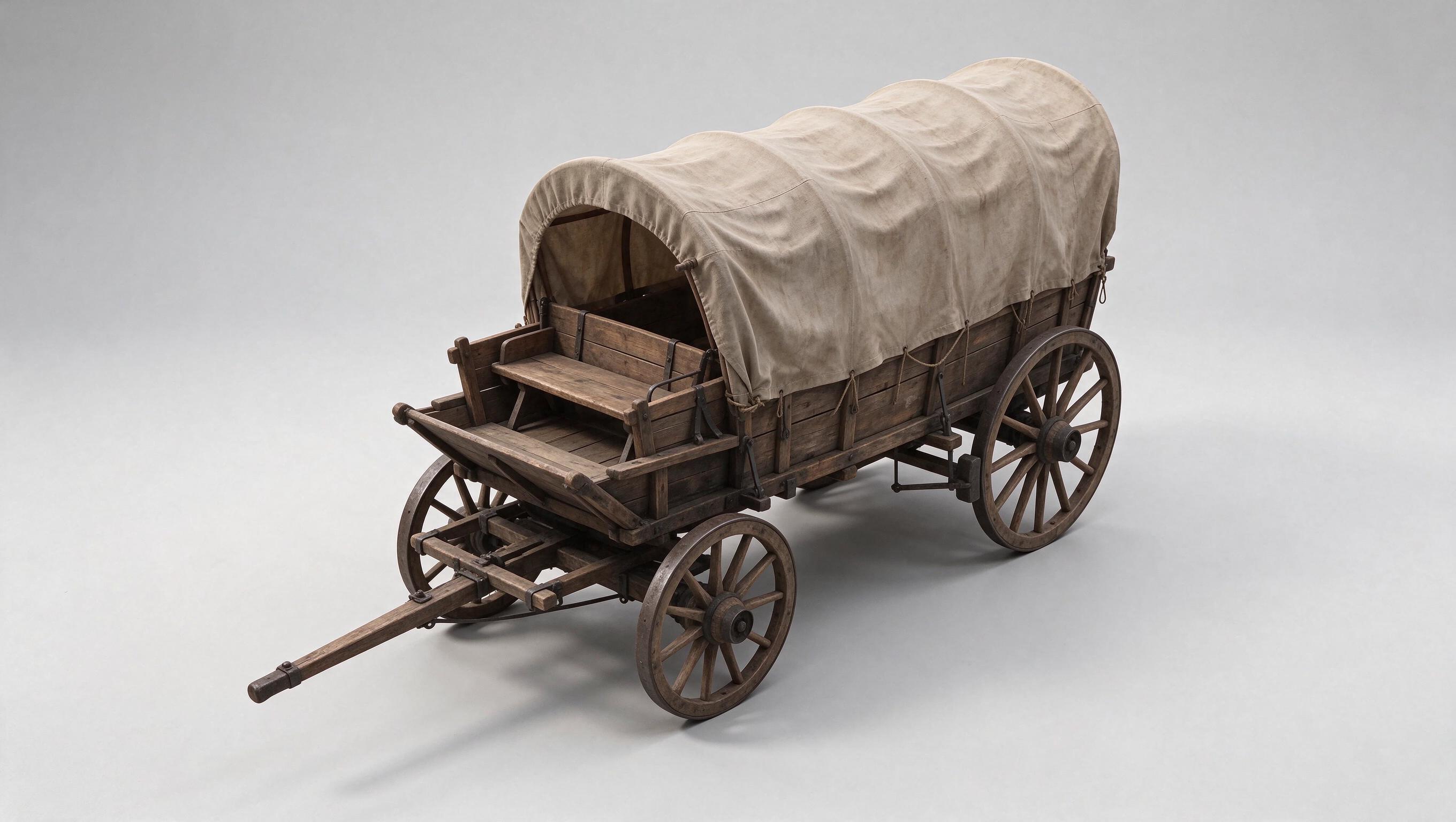
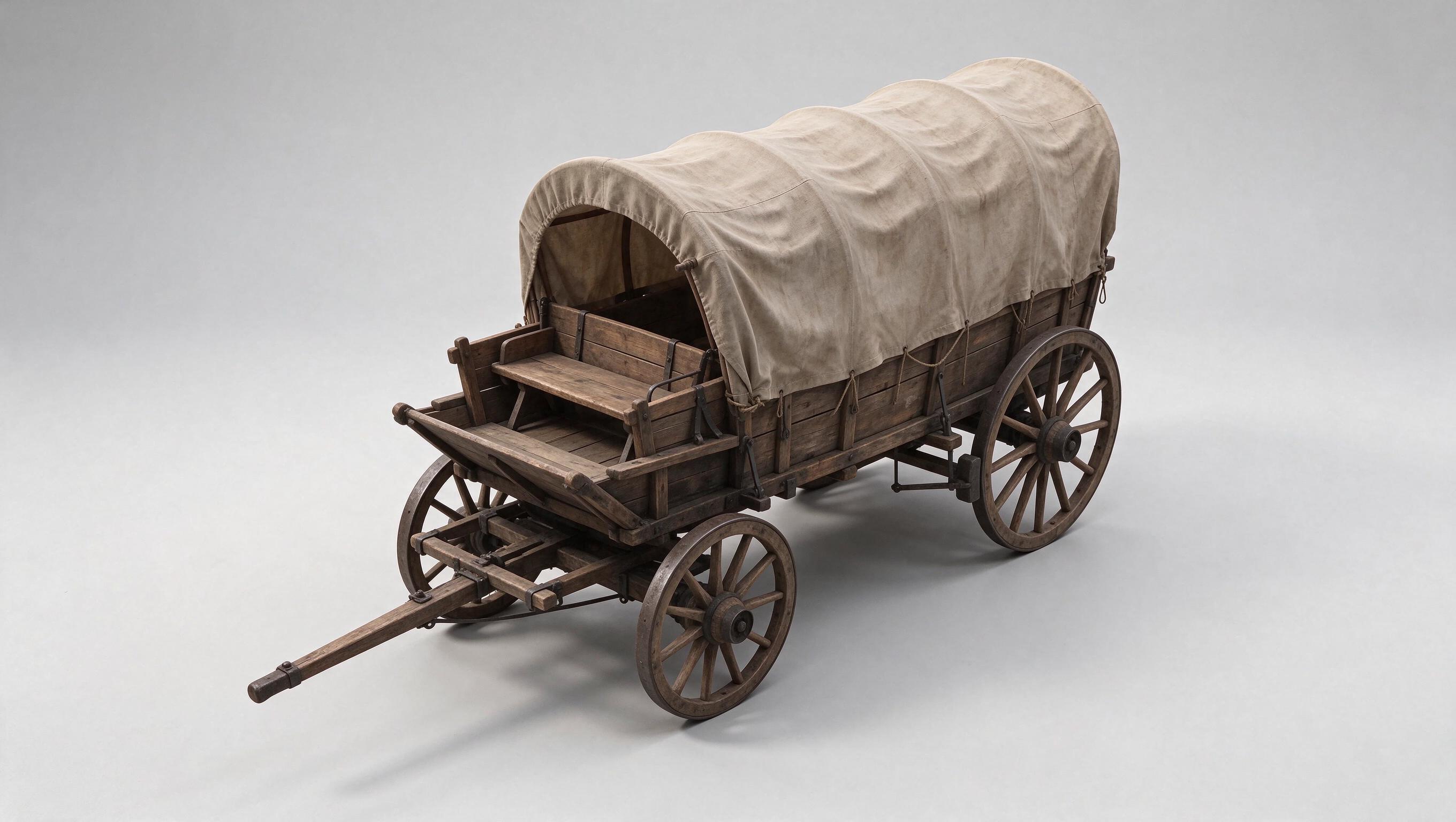
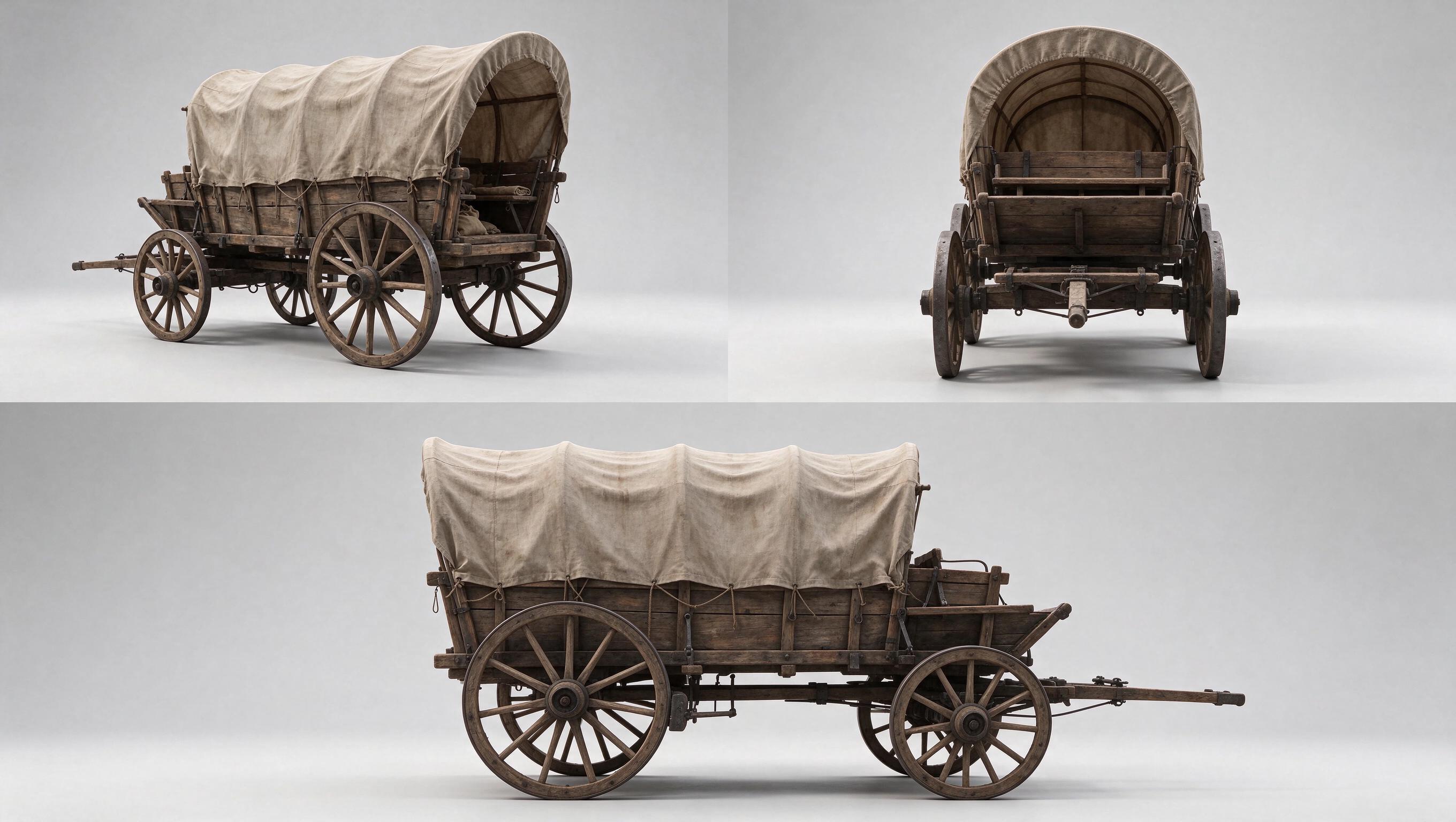
# MEDIEVAL COVERED WAGON — CINEMATIC VEHICLE REFERENCE SHEET Create ONE professional cinematic vehicle reference sheet featuring EXACTLY THREE different camera views of the SAME medieval covered wagon from the uploaded reference image. This wagon is an approved practical film prop for the high-budget live-action fantasy adventure film ROAD OF WORLDS — ACT I. **CRITICAL: Preserve the exact design, construction, dimensions, proportions, materials, weathering, canvas canopy, wheels, and wooden body of the original wagon.** This is a camera-angle study of ONE EXISTING WAGON, not a redesign. ## 1. STRICT REFERENCE PRIORITY The uploaded photograph is the definitive design reference. Preserve: - Four wooden spoked wheels with iron-reinforced rims. - Two smaller front wheels and two larger rear wheels. - Weathered natural timber construction. - Rectangular wooden cargo-passenger body. - Tall, curved, light-beige linen canvas canopy. - Original canopy shape, height, folds, wrinkles, seams and supporting bows. - Wooden plank sidewalls. - Original iron brackets, hinges, nails and fasteners. - Rope loops, leather straps and external utility fittings. - Rear passenger opening beneath the canvas canopy. - Simple wooden interior seating and cargo space. - Front wooden drawbar and towing assembly for horses. - Original natural wood and canvas colors. The same physical details must correspond correctly across all three views. **IMPORTANT GEOMETRY:** In the uploaded reference, the towing drawbar extends toward the LEFT SIDE of the picture. This identifies the FRONT of the wagon. The visible open end of the canvas canopy on the RIGHT SIDE of the picture is the REAR passenger entrance. Never confuse or exchange the front and rear of the wagon. ## 2. EXACTLY THREE CAMERA VIEWS Create three separate wide image panels arranged VERTICALLY from top to bottom. Each panel shows ONE complete wagon from a different camera angle. All three panels must depict the exact same vehicle. ### PANEL 1 — APPROVED REAR THREE-QUARTER VIEW Reproduce the camera angle shown in the uploaded reference. The wagon is viewed from behind and to one side. The large rear passenger opening beneath the beige canopy is visible toward the RIGHT SIDE of the image. The towing drawbar extends toward the LEFT SIDE. Show the same: - Canopy shape. - Open rear entrance. - Wooden sidewalls. - Wheel sizes and positions. - Visible interior seating. - Timber and iron construction. - Original fabric folds and ropes. Preserve the approved reference composition as closely as possible. Do not change the camera angle into a front view. ### PANEL 2 — EXACT STRAIGHT FRONT VIEW Show the SAME wagon photographed DIRECTLY FROM THE FRONT, looking toward its towing assembly. The camera is located directly in front of the wagon, where the horses would normally stand. The towing drawbar is aligned with the camera's central axis. The front of the wagon faces directly toward the viewer. Both front wheels are visible, positioned symmetrically on either side. The front wooden structure and the leading edge of the canvas canopy are clearly visible. **DRIVER'S SEAT — IMPORTANT:** Reveal the functional driver's position at the front of the wagon, immediately ahead of the covered passenger compartment. If the original photograph does not clearly show a driver's bench, reconstruct only a simple, historically plausible wooden driving bench attached to the existing front frame. The bench must be practical, modest and consistent with the wagon's rustic construction. Include a small wooden footrest if necessary. Do not create a separate carriage body or change the main chassis. The driver sits OUTSIDE the covered passenger area, facing the direction of travel. The bench must remain structurally consistent with the wagon shown in Panels 1 and 3. The rear passenger entrance must NOT be visible in this frontal view. Do not show a rear opening at the front. ### PANEL 3 — EXACT OPPOSITE SIDE VIEW Show the SAME wagon photographed from the OPPOSITE SIDE compared with Panel 1. The camera is positioned at a strict 90-degree side angle. The wagon's entire long side must be visible. The FRONT of the wagon is positioned toward the RIGHT SIDE of this panel. The REAR is positioned toward the LEFT SIDE. This reversal is caused by viewing the same physical wagon from its opposite side, NOT by arbitrarily mirroring or redesigning the vehicle. Show: - Both wheels on the visible side. - The full length of the wooden body. - The exact shape of the canvas canopy. - The original support bows and canvas attachments. - The driver's bench at the front. - The front towing structure. - The rear end of the covered compartment. The wheels must remain properly aligned with the vehicle's two axles. The wooden sidewalls must have the same height and construction as in the original reference. The wagon must remain identical in scale and physical dimensions. ## 3. HISTORICAL AND PHYSICAL REALISM The vehicle must look like an authentic, functional medieval rural transport wagon constructed for a professional live-action film. Realistic engineering is essential. The four wheels must connect correctly to the front and rear axles. The front axle and towing assembly must be physically plausible. The canvas canopy must be supported by curved wooden bows. All ropes and straps must have meaningful attachment points. The wooden frame must appear capable of supporting passengers, grain sacks, tools and ordinary travel supplies. The driver's bench must be physically connected to the wagon. No impossible floating parts. No disconnected wheels. No decorative fantasy mechanisms. No modern suspension or rubber tires. ## 4. MATERIAL QUALITY **WOOD:** Naturally aged timber with visible wood grain, knots, cracks, scratches, weathering, and worn edges. **CANVAS:** Heavy off-white and light-beige natural linen with realistic fiber texture, irregular wrinkles, seams, dust, and gentle sagging between supporting bows. **METAL:** Worn forged iron with oxidation, scratches, authentic rivets, brackets, and mechanically believable attachments. **ROPE:** Coarse natural fibers, realistic knots, functional tension and hanging loops. Materials must be physically real and consistent across all three views. Do not artificially sharpen textures or exaggerate surface details. ## 5. APPROVED CINEMATIC VISUAL STYLE Hollywood Cinematic Hyperrealism. Live-Action Feature Film. Ultra-Realistic Cinematic Photography. ARRI Alexa 35 visual characteristics. Cooke S4/i lens aesthetics. Kodak Vision3-inspired organic photographic color grading. Wide dynamic range. Natural optical sharpness. Physically plausible lighting. Realistic materials, surface wear and contact shadows. The wagon must resemble a REAL physical movie prop photographed on a professional studio set. Not a 3D game model. Not concept art. Not a digital painting. Not a cartoon. Not an illustration. ## 6. STUDIO BACKGROUND All three panels must share the SAME clean neutral light-gray studio background. Background color: #E5E5E5. Use soft, evenly distributed studio lighting. Natural shadows beneath the wheels. Consistent camera exposure and neutral color temperature. No mountains, roads, grass, forests, buildings or fantasy environments. No people. No children. No horses. No other wagons. No unrelated props. ## 7. IMAGE LAYOUT — STRICT Create ONE image in a vertical 2:3 aspect ratio. Divide the image into THREE equally sized horizontal widescreen panels stacked vertically. TOP PANEL: original rear three-quarter view. MIDDLE PANEL: strict frontal view showing the driver's position. BOTTOM PANEL: strict opposite-side view. Exactly ONE wagon inside each panel. Exactly THREE wagon representations in total. Every wagon must fit completely inside its panel, including the drawbar, canopy and all wheels. Leave enough space around the outermost parts. Do not crop the wagon. Do not overlap panels. Do not add text, labels, titles, dimensions, logos or watermarks. The three panels must be clean, consistent and suitable for extracting individual reference images. ## 8. STRICT NEGATIVE REQUIREMENTS No redesign. No different wagon. No changing wheel count. No replacing wooden wheels. No changing canopy shape. No changing the body dimensions. No swapping the front and rear. No passenger opening on the front. No missing drawbar. No modern carriage features. No luxurious decorations. No fantasy ornamentation. No people or animals. No action scenes. No landscape backgrounds. No cartoon styling. No video-game graphics. No artificial plastic-looking textures. No extra camera views. No duplicate camera angles. ## FINAL PRIORITY ORDER 1. ONE IDENTICAL WAGON across THREE views. 2. Accurate reproduction of the uploaded reference. 3. Correct front and rear orientation. 4. Original rear three-quarter view. 5. Strict front view revealing a functional driver's seat. 6. Strict opposite-side view. 7. Physically realistic construction. 8. Hollywood cinematic photographic realism. 9. Uniform neutral-gray studio background. 10. Exactly three horizontal panels in one vertical image. **ACCURACY, DESIGN CONSISTENCY AND PHYSICAL REALISM ARE MORE IMPORTANT THAN ARTISTIC CREATIVITY.**

Free to start · Generate videos and images with AI in seconds
More from this creator
More Seedream 5.5 images
См. все →